Reactive intermediates
We use electrochemical control to generate reactive species at low steady-state concentration and couple their formation directly to productive bond-forming reactions.
Synthetic Electrochemistry at the University of Greenwich
We combine organic electrosynthesis, electroanalysis and reactor design to make difficult reactions safer, more selective and easier to scale in batch and flow.
Research
Our research addresses three connected challenges: generating reactive intermediates under controlled conditions, understanding how electron transfer governs selectivity, and translating promising reactions into reproducible batch and flow processes.
We use electrochemical control to generate reactive species at low steady-state concentration and couple their formation directly to productive bond-forming reactions.
We combine voltammetry, controlled-potential experiments, spectroscopy, kinetics and computation to test how electron transfer, mass transport and reaction conditions determine selectivity.
We translate useful transformations from discovery-scale experiments into controlled batch and flow processes, with attention to current density, electrode geometry, mixing, heat transfer and residence time.
Featured in Chemical Science
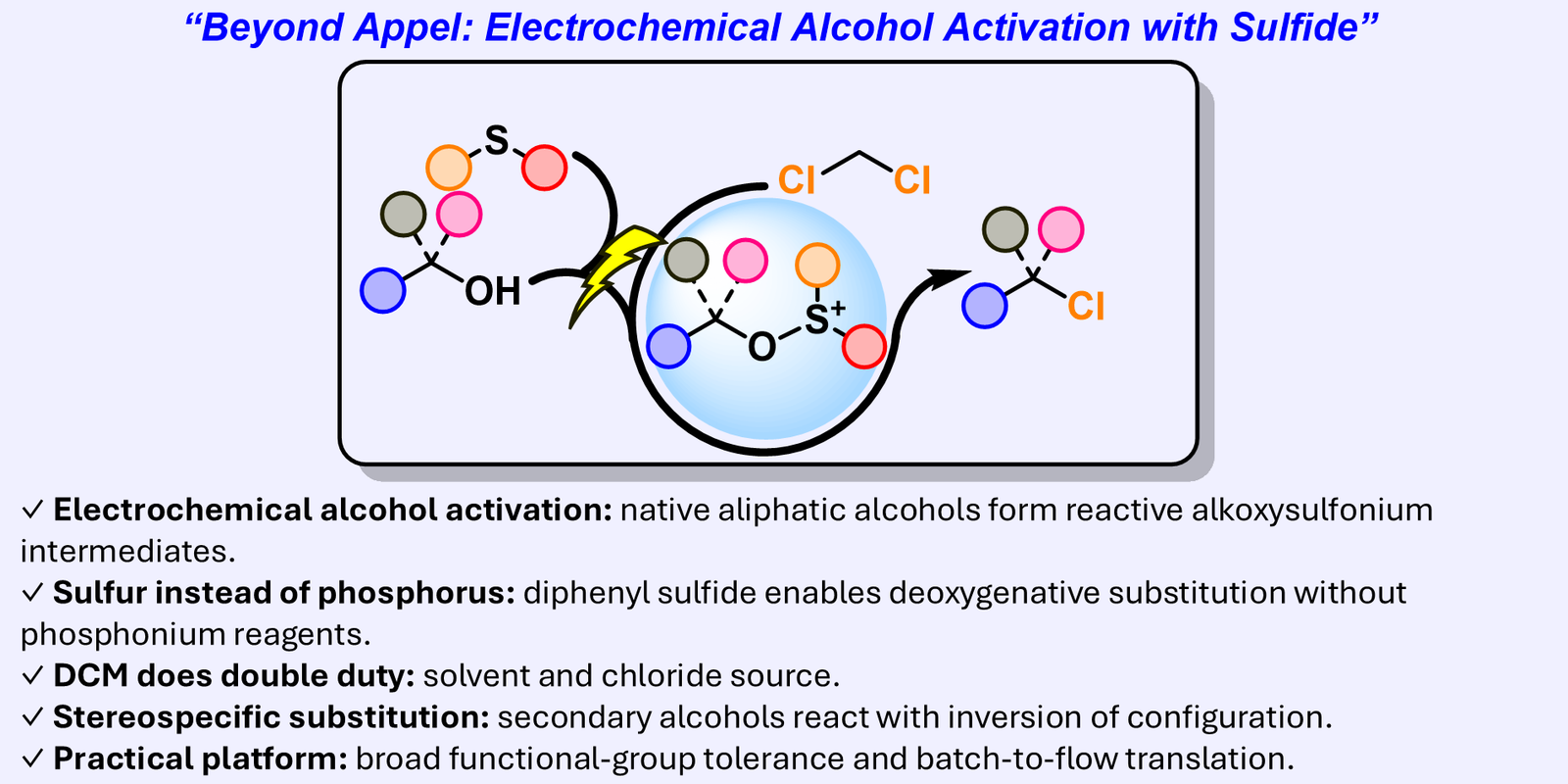
Diphenyl sulfide and electricity activate native aliphatic alcohols through reactive alkoxysulfonium intermediates, enabling their mild conversion to alkyl chlorides. The method tolerates amines, carbamates, heteroaromatic rings, sulfones and free carboxylic acids, proceeds with inversion at stereogenic alcohol centres, and translates from batch to flow.
A phosphorus-free route from native alcohols to alkyl chlorides.
Recent work
Accounts of Chemical Research, 2026 · Review
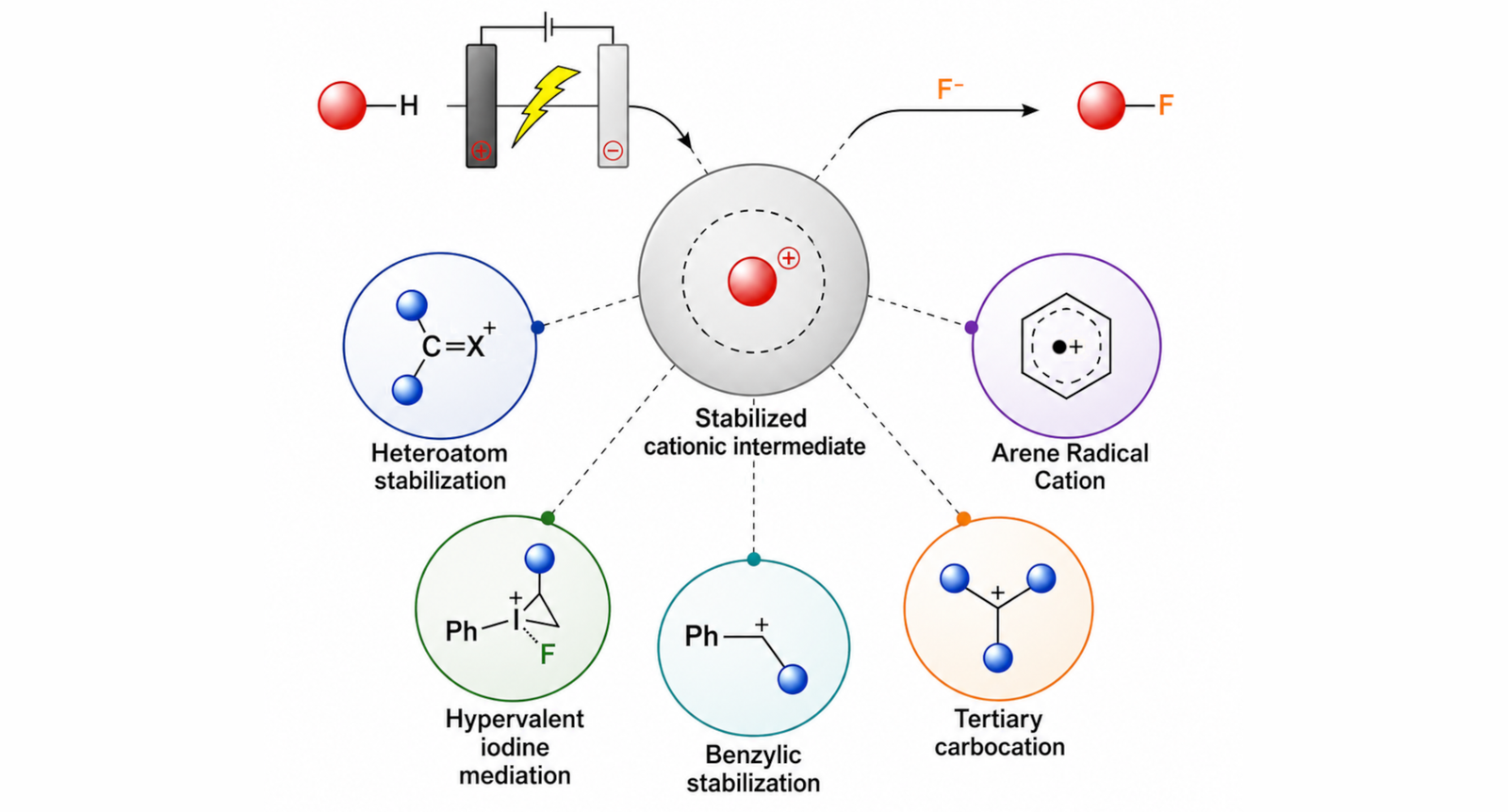
A review of how controlling cationic intermediates enables selective carbon–fluorine bond formation through synthetic electrochemistry.
Nature Communications, 2026
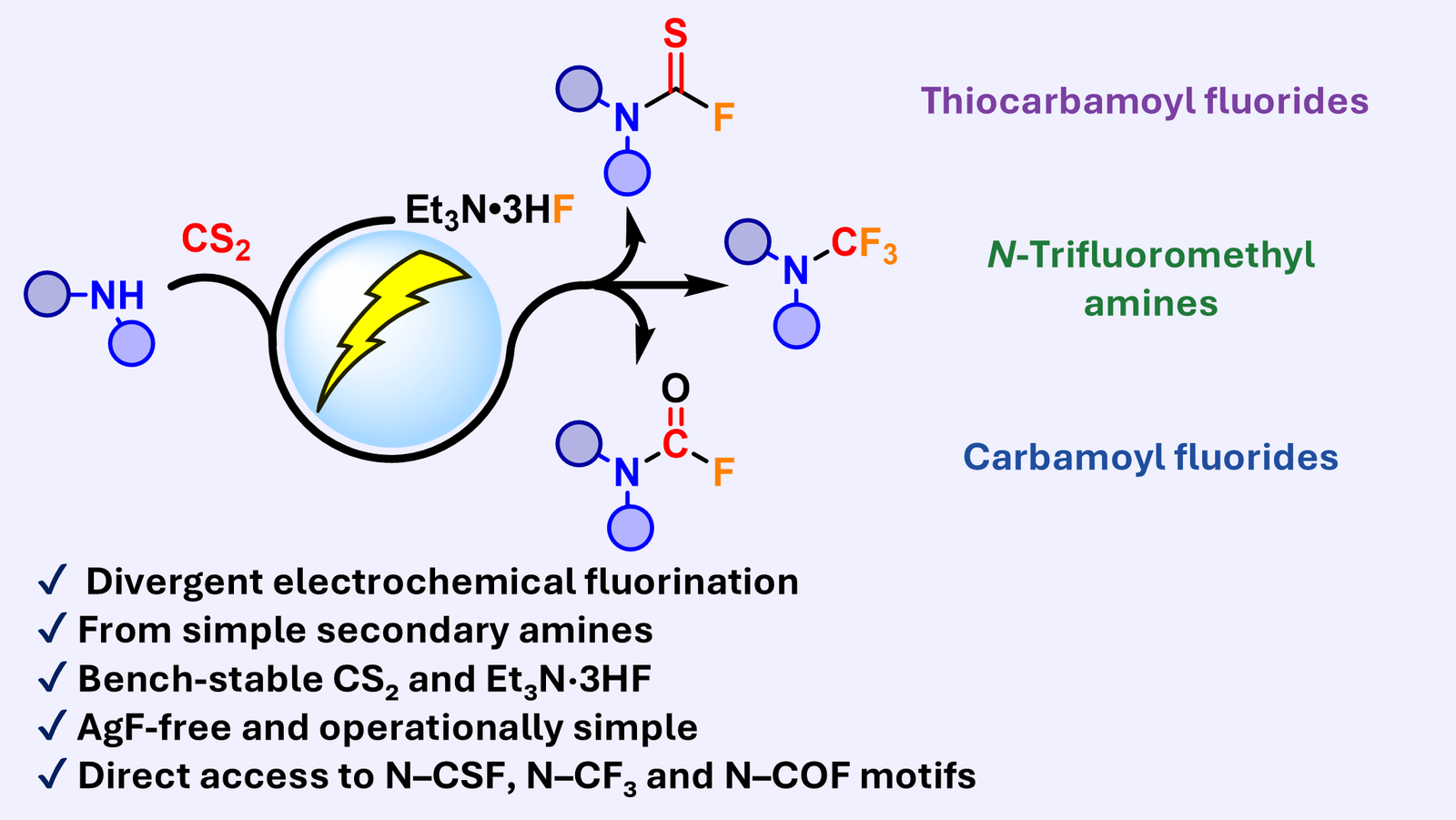
Changing reaction conditions directs secondary amines to either thiocarbamoyl fluorides or N-trifluoromethyl amines in one pot, using practical reagents. The method supports late-stage modification and includes mechanistic analysis.
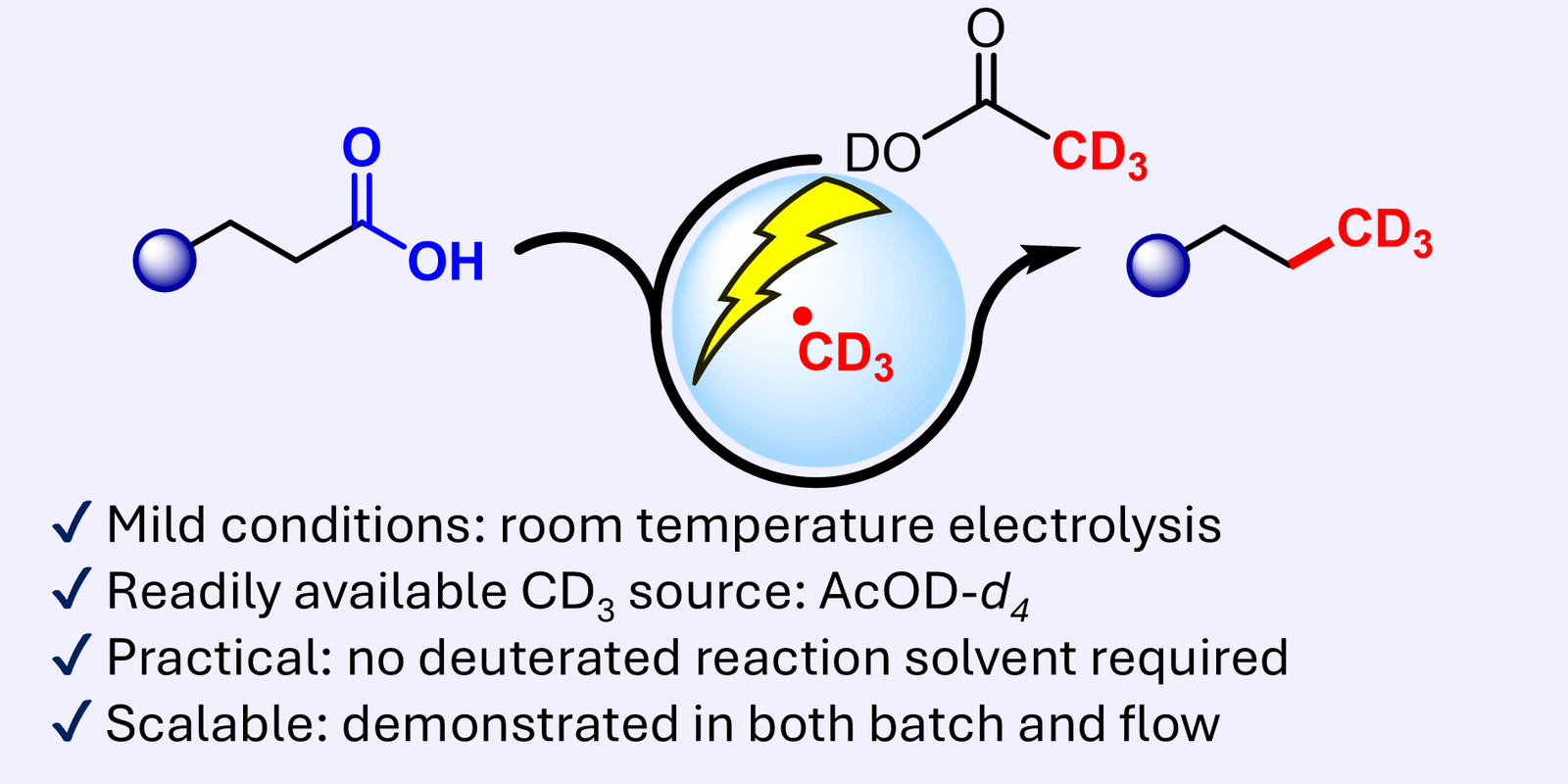
Organic Letters, 2026
Electrochemistry installs CD₃ from inexpensive AcOD-d₄, providing trideuteromethylated building blocks in batch and flow.
Facilities and capabilities
Dedicated group facilities connect electrosynthesis, electroanalysis, flow processing, purification and analytical feedback in one working environment, supporting rapid iteration from mechanistic insight and reaction discovery to batch and flow translation.
Our group
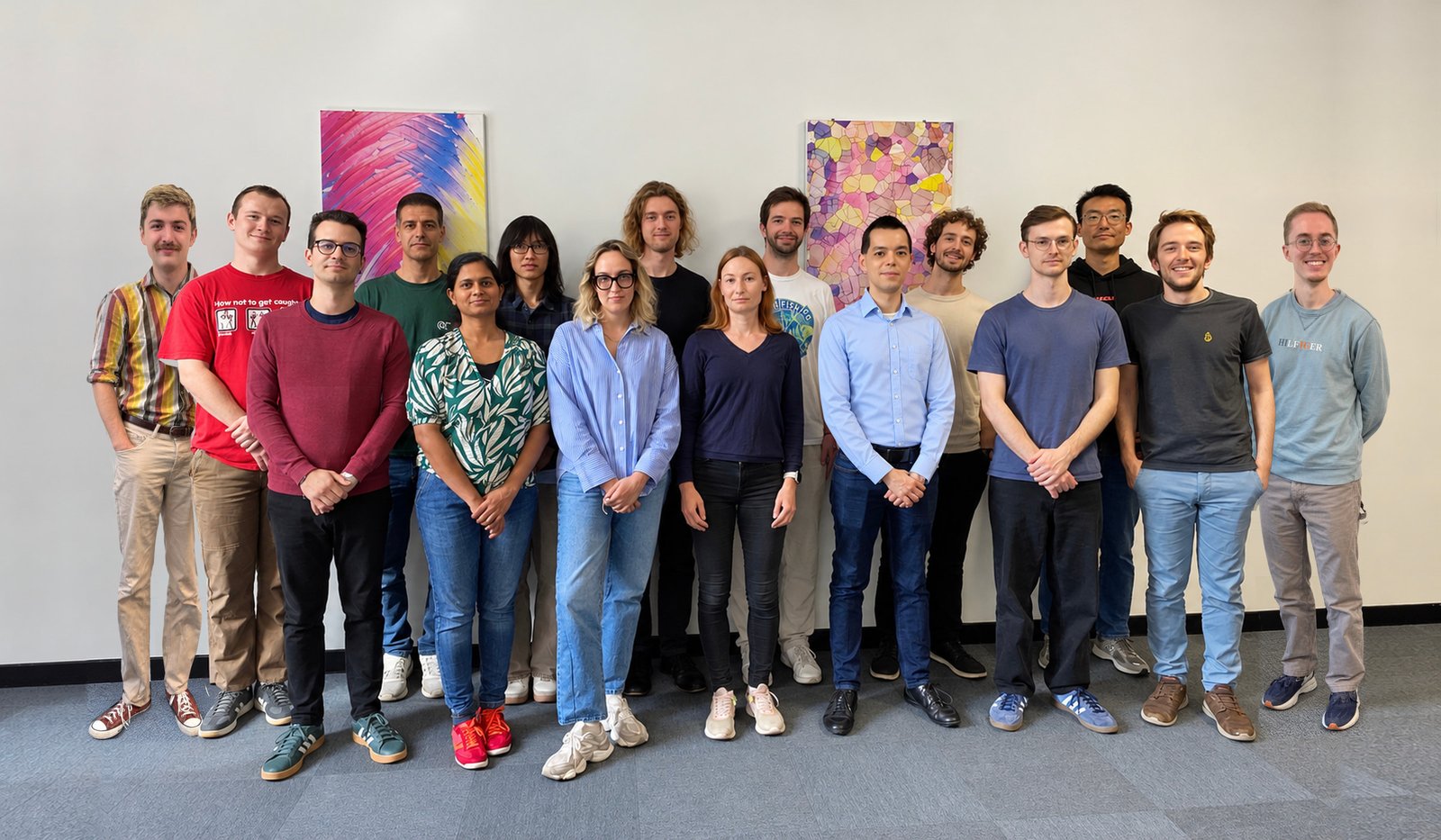
The group brings together researchers in organic synthesis, electroanalysis, reaction mechanism, reactor design and process translation.
Group update · 2026–27
The group begins the academic year with new doctoral and visiting researchers, alongside the start of an MSCA Postdoctoral Fellowship and an MSCA Doctoral Network appointment.
Contact